I dropped my Bialetti Moka Express and the handle broke-off. I thought about fixing it (and I still might), but the handle has the combined requirements of tolerating very high temperatures and also remaining cool which is something I don't know exactly how to replicate myself, so for now I decided to pick-up a new one.
I recently purchased a single-burner induction "hot plate" for both emergency use and also just to see what working with an induction stove-top would be like should we decide to go that way in the future. Since I can't imagine an emergency that wouldn't be improved with hot coffee, I decided to try giving an induction-compatible Moka pot a shot.
I was surprised by how much more expensive the 4-cup Moka Induction was from what I paid for the Moka Express, but looking at current prices for both I guess the bump to get something that works with induction isn't that severe. All of these things have gotten a lot more expensive lately...
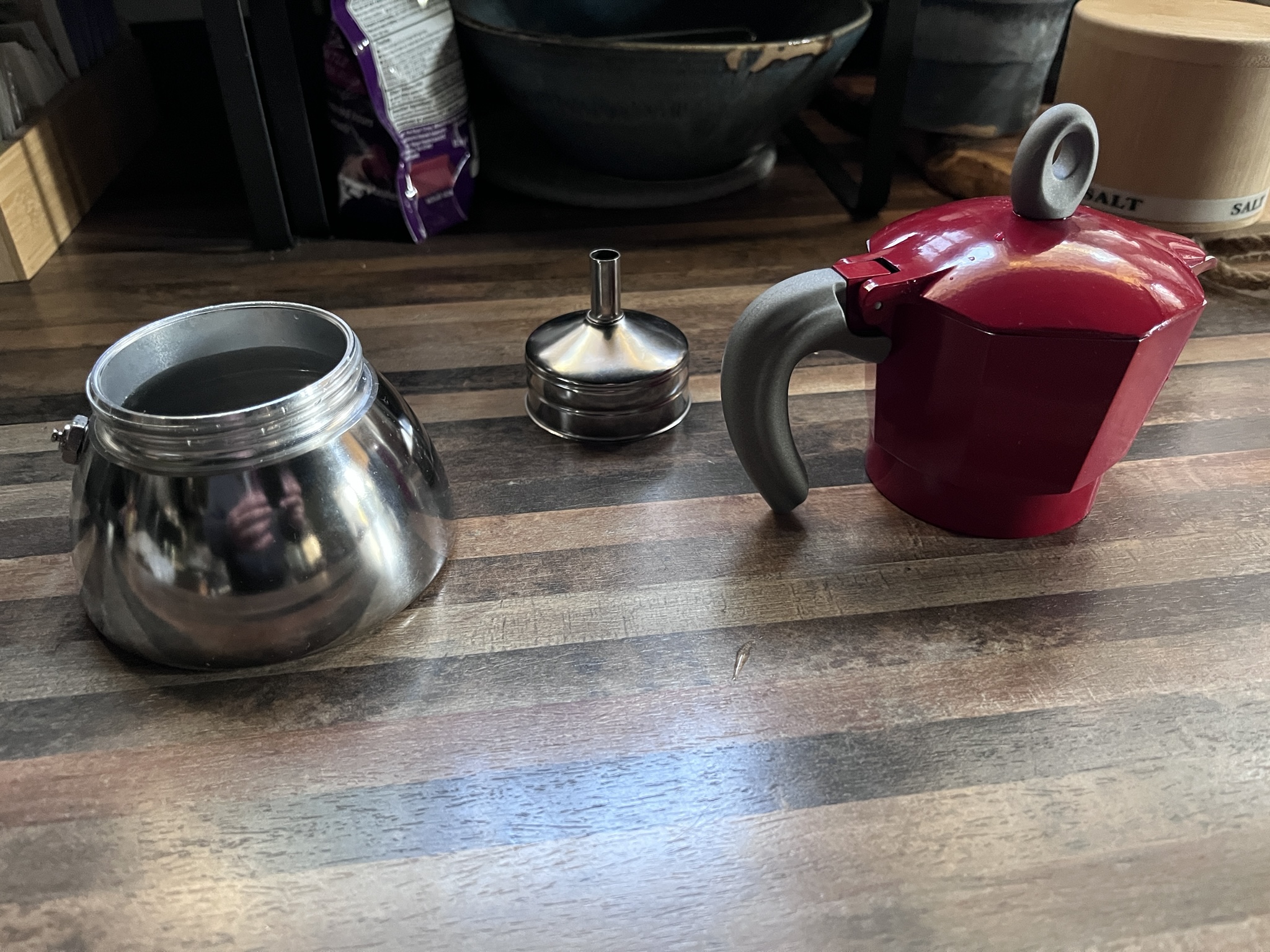
I got red because it cost the same as the other option (black), and we all know red is faster.
The Moka Induction is unsurprisingly a lot heavier than the all-aluminum Express. This isn't all bad, it feels a lot more stable than the Express, especially on our gas range. Working-through the "seasoning" process (essentially running three rounds through the machine, one with water-only and two more with coffee)
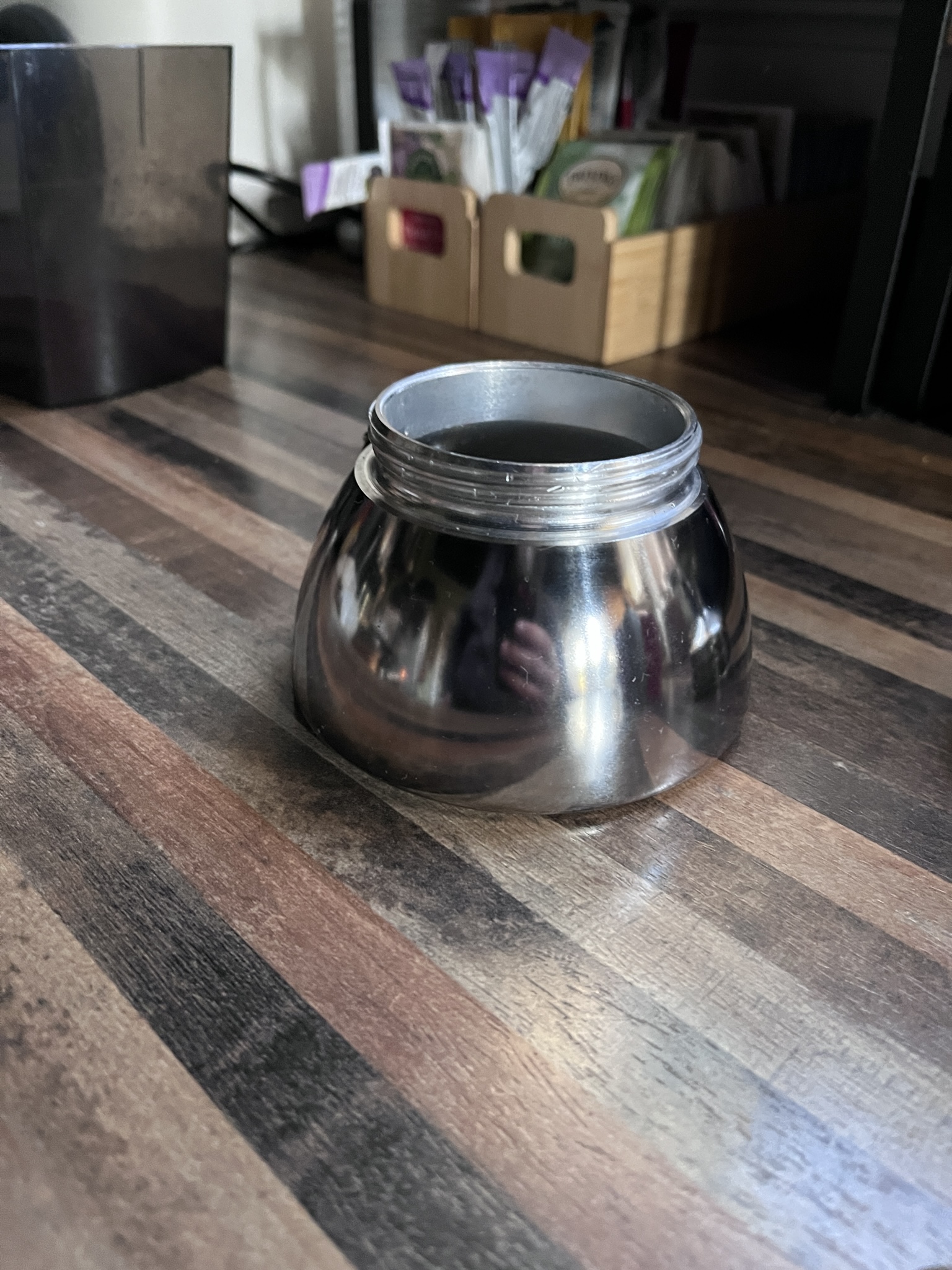
I noticed the steel base of the induction-compatible version holds a lot more heat for a much longer time. Again not a complete surprise, but it does mean making back-to-back servings is a little trickier than just running the Express under cold water for a few seconds before you can handle it safely.
The funnel/filter is a bit different two, again a different metal than the Express, shiner and with a different shape. It also seems to hold-on to water more than the old funnel (which seems true for the rest of the coffeemaker) and requires a bit more shaking and turning-around to get all the water out of it after cleaning.
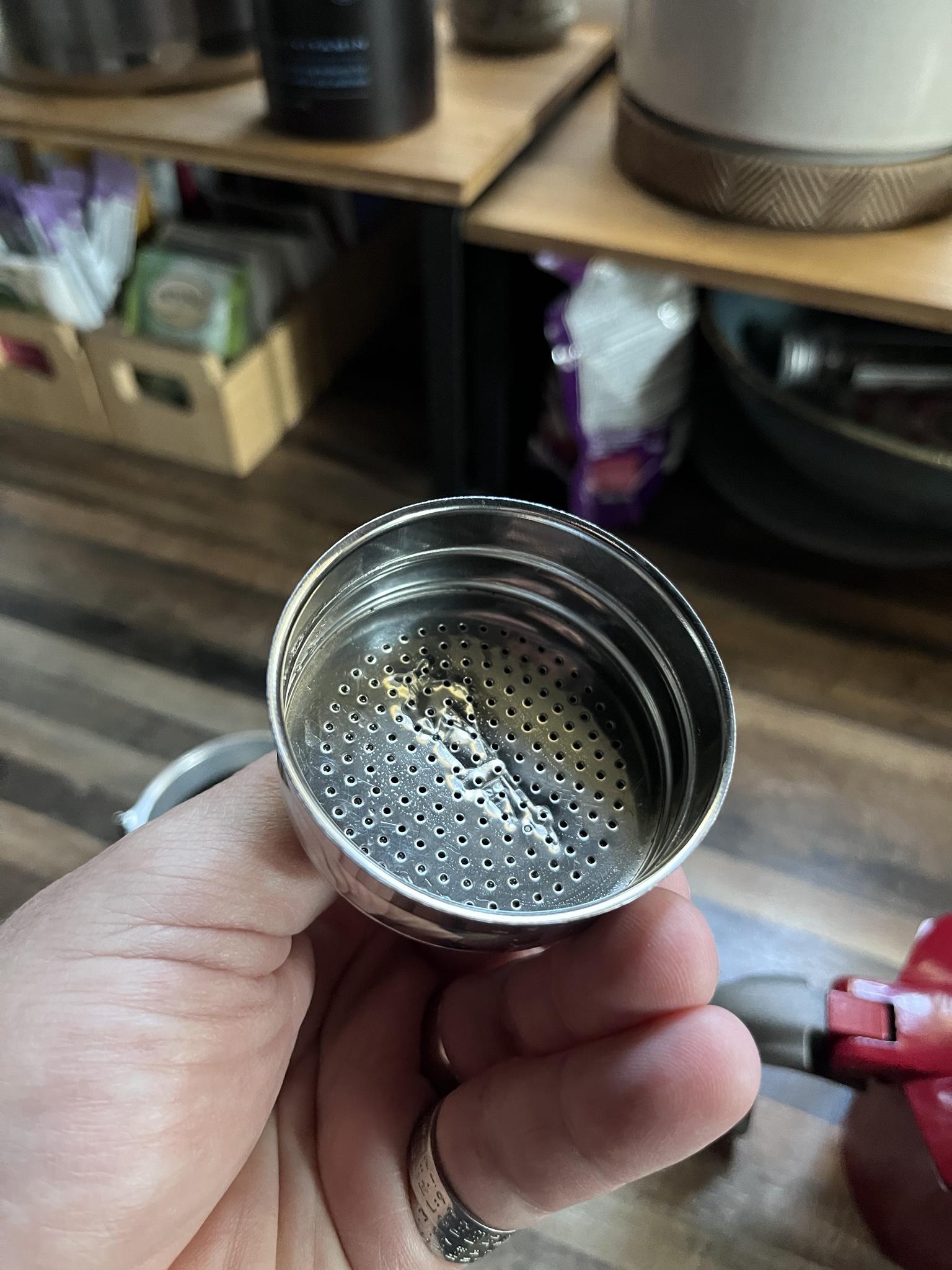
The induction version seems to take the same amount of time to make coffee as the Express, maybe a little faster (the larger boiler surface area perhaps?) but the difference, if any, is small enough that I don't notice.
What I do notice is that when pouring from the new pot a lot more steam/vapor is released toward my hand and the first time I poured a cup from it I managed to burn myself.
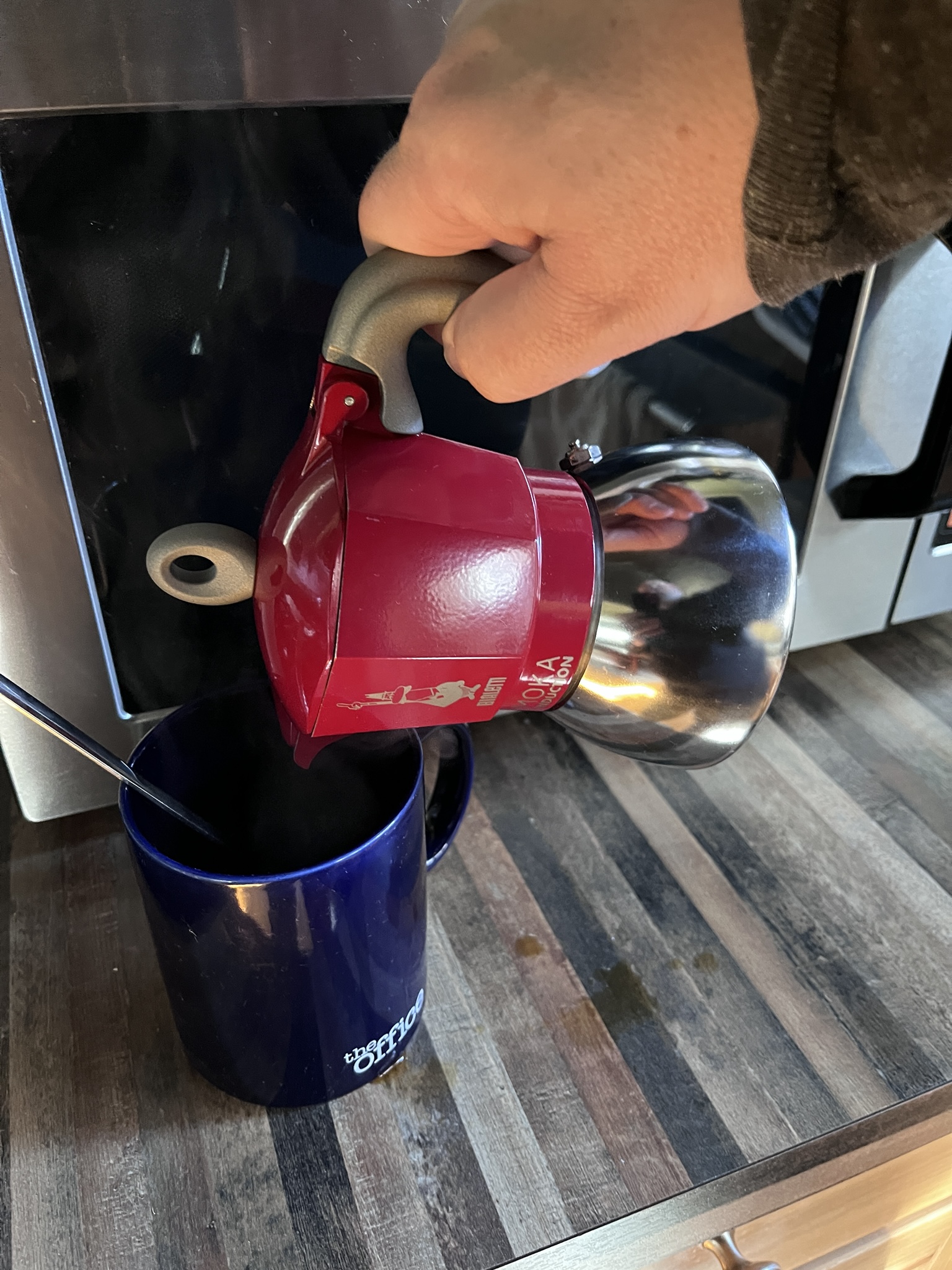
Hard to get a photo, but the steam leaks out the hinge-side of the lid when pouring...
Interestingly enough, the induction version has a very different handle from the Express, it feels a bit more rubbery (maybe less likely to shatter like the Express did when I dropped it?). The material and shape seem to do a worse job of remaining cool than the original, and I find I have to use a sleeve or a pot holder to pick-up and pour the thing.
I also got a chance to try the new pot with an induction cook-top (the one I mentioned earlier).
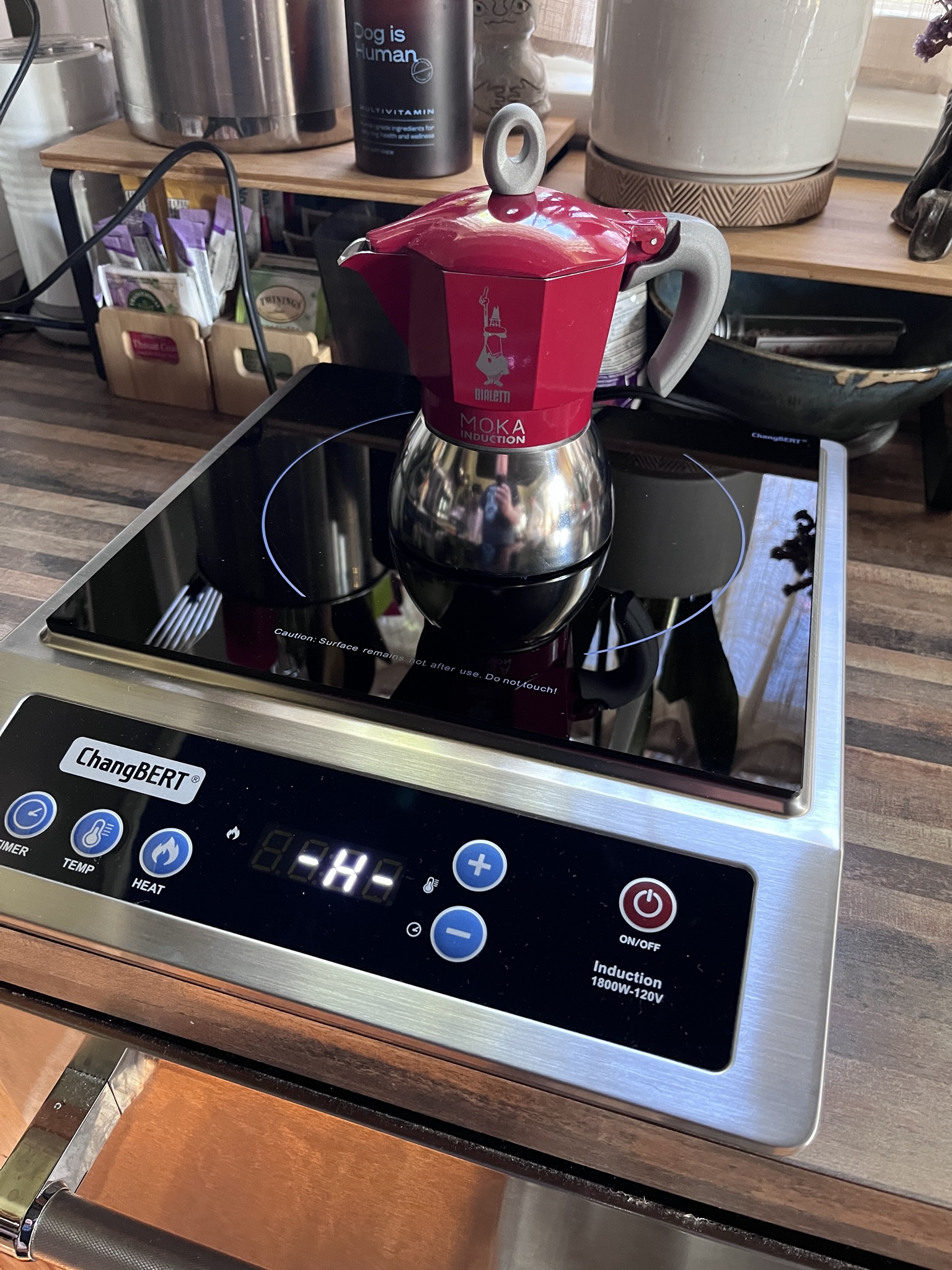
Rossa on the ~$100, 1800W induction hot-plate. I'll probably write a post about this thing in the future
I was a little concerned because I'd read that some induction stoves won't work with a small pot on a large "burner", but the plate detected the pot just fine, and with the power set to 1000W (roughly 50%, the recommended power level as per the instructions) it started boiling in about half the time it took on the gas range.
The good news is that the results (the coffee itself) are, as far as I can tell, identical to my original Moka Express. The first few cups were inconstant even after the "seasoning" process but I'm happy to say now that I'm at least ten cups in that the flavor, body, etc. are indistinguishable.
So there are some trade-offs to the induction version of the Bialetti Moka pot, and if you were sure you'd never need to make coffee on an induction cook top I would recommend sticking with the less-expensive Express. But if like me there's a chance you might need something induction-compatible the extra cost and minor inconveniences of the induction version are worth it.
Jason J. Gullickson, 2026